What is AI visibility, for a small business?
Camello team · Published · Updated
AI visibility is how often, and how accurately, ChatGPT, Perplexity, Gemini and Google's AI answers name your business when someone asks for what you sell. It is like SEO, except the result is a sentence rather than a link, and you are either in the sentence or you are not. For most small businesses today the honest number is zero, and the way to change it is mostly the site basics done every month.
See whether the engines name you today.
What is AI visibility?
How often and how accurately the AI answer engines name your business when someone asks a question you could answer. "Who is a good plumber in Franklin?" gets a sentence back, and that sentence names one to five businesses, or none. Your visibility is whether you are in it, how often across many askings, and whether what it says about you is right.
Google's own definition, from the AI Overview it showed on 2026-10-17 for "what is AI visibility", says the same in its words: AI visibility "operates on a citation model"; when a user asks an AI a question, the platform synthesizes an answer, and your brand is either cited, mentioned, recommended, or left out. That is the whole of it. There is no page two.
Three things follow from "a sentence, not a list". There are far fewer slots: one to five names instead of ten links. The engine does not just rank you; it describes you, so what it says has to be right. And the answer varies from one asking to the next, so visibility is a rate across many askings, not a position.
How is it different from SEO?
The inputs are mostly the same; the output is different. SEO earns a link in a list of ten, where the searcher chooses. AI visibility earns a mention in a sentence of one to five, where the engine has already chosen. The same site basics feed both: clear pages that say what you do and where, consistent facts about you across the web, reviews, and real answers to real questions. What changes is that there are fewer places in the answer and no second page.
| Google search (SEO) | AI answers (AI visibility) | |
|---|---|---|
| What you get | a link in a list of ten | a mention in a sentence of one to five |
| Who chooses | the searcher, by clicking | the engine, by writing |
| What it reads | your pages, links to you, your profile | the same, plus what other pages say about you |
| How it varies | positions move slowly | answers change from one asking to the next |
| How you measure | position, clicks | named or not, across repeated askings |
| What moves it | site basics, consistency, reviews, answers | the same |
Two honest notes. First, the industry's term for this is cooling: on Google Trends, interest in "AI visibility" in the US fell from about 30 to 17 over the twelve months to October 2026, while the plain question "show up in ChatGPT" held steady. The thing is real; the buzzword is fading. Second, SEO is not dead because of it, and the engines themselves say so; that has its own guide.
How do I check mine?
Ask the engines the questions your customers ask, in a fresh chat, several times, and write down who they name. That is the honest manual method, and it works. The free check does the same across ChatGPT, Perplexity and Gemini through their official interfaces and shows you the result with its date, so you do not have to keep a notebook. Most small businesses find they start at zero.
How is AI visibility calculated?
It should not be calculated; it should be counted. For each question and each engine, you were named or you were not. "Named in 2 of 9 askings this month" is a measurement you can act on and compare next month. A "visibility score" of 0 to 100 is a vendor's formula layered on top, and each vendor's formula is different, so the scores do not compare across tools and hide what was actually asked.
Camello shows counts only: questions asked, engines asked, times named, the competitor named if the engine returned one, and the page the engine cited. On Free each question is asked once a month; on Starter twice; on Pro three times, because more askings give a steadier rate.
What are some free tools for analyzing AI visibility?
Several. The large SEO tools (Ahrefs and Semrush among them) now give away AI visibility checkers, and single- purpose free checkers exist too. Ours is one of them. The difference we claim is narrow: Camello's check shows the exact change it would make to your site, with the current and the new wording, and dates every number. We do not claim to be the only free check.
Should a small business invest in AI visibility?
Invest time before money, and invest in the basics before anything with "AI" in its name. All five engines we asked said the way to show up in AI answers is good SEO and local-listing basics done consistently: a plain site, a complete Google Business Profile, identical name, address and phone everywhere, reviews, real answers on the page. Those cost an afternoon each and they serve Google too. Spend money only on what you will not do yourself every month: the measuring and the doing.
What we do not know: how much a mention in an AI answer is worth to your business in customers. Nobody has measured that for small businesses that we could find, and we will not make up a number. What you can measure is whether you are named, and whether clicks from Google rose after the changes. Those two numbers, read separately, are the honest basis for deciding whether to keep investing.
How do I know if it worked?
Take a baseline, change one thing, and a month later ask the same questions and check the same pages. Look at three numbers separately: your Google position, your real clicks from Search Console, and whether the engines name you. Expect weeks for a page to be re-read and one to three months to see movement. Camello does the before and after on a fixed window per change and writes one of three words: won, no effect, or too early to say. "No effect" is a normal answer, and we never round "too early" up.
What does an AI visibility tool do?
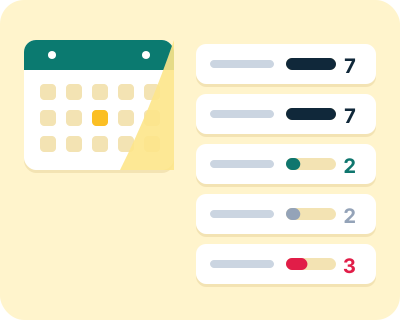
It asks the AI engines your customers' questions, records whether you or a competitor is named, and reports it, usually as a chart or a score. Most tools stop there. In the AI engines' own answers on 2026-10-17, every tool they named to a small business was described as monitoring and reporting; none was described as changing the site or checking afterward whether a change moved the number.
That is the gap Camello was built for. It monitors the same way, then generates the fixes, website updates and fresh content with the exact wording, writes them into your WordPress site when you click Apply, and measures again. If you want the report alone, several good tools sell one, and the next section names them fairly.
What are the best AI visibility tools for a small business?
It depends on whether you want a report or the fixes. For a report alone, the AI engines themselves most often name Semrush, Ahrefs, Otterly, Profound and Peec, and put a small business's monitoring at about $20 to $100 a month. Camello measures and also makes the changes, from $0, or $24 a month on Starter. Here is the comparison with the engines' own numbers, dated, and who each tool is for in the engines' answers.
| Tool | Named in how many of 150 engine answers (2026-10-17) | What the engines said it costs | Who it is for, in the engines' answers | What it does, in the engines' answers |
|---|---|---|---|---|
| Semrush (AI toolkit) | 18 | about $99 a month | marketers; the incumbent | monitors AI and search, reports |
| Ahrefs (Brand Radar) | 11 | not quoted for this use | marketers with an Ahrefs account | monitors AI mentions, reports |
| Otterly | 10 | from $29 a month | the small-business pick | monitors AI answers, reports |
| Profound | 9 | hundreds to thousands a month | enterprises | monitors at scale, reports |
| Peec AI | 7 | about €89 a month | mid-market | monitors AI answers, reports |
| Camello | 0 (every "Camello" the engines named was a namesake) | Free; $24; $49 | US small businesses on WordPress | measures Google and AI answers, generates the changes, applies them with undo, measures again |
Read the table honestly. Semrush and Ahrefs are far better known than Camello, and the engines named them to a small-business buyer far more often; if you already pay for one, its AI checker is a sensible place to start. Otterly is the one the engines called the small-business pick, at $29. Camello's row says only what it does and what it costs; we have no customers' results to put beside it yet. What it does that the others were not described as doing is the applying and the re-measuring. Starter at $24 sits below every entry price the engines quoted except the $20 floor.
What is the best AI visibility platform?
For a large company with a marketing team, the engines point at Profound, Semrush and Peec. For a small business that wants a report, Otterly. For a small business on WordPress that wants the changes made and checked, Camello, which is the only reason we built it.
Why does the industry call it AEO or GEO?
Because the industry needed a name and picked two. AEO is "answer engine optimization": making your site easy for an answer engine to quote. GEO is "generative engine optimization": the same idea, named for the engines that generate text. Some people say "AI SEO", which on Google Trends is the biggest of all these phrases in the US. They all mean the work in this guide: clear pages, consistent facts, reviews, real answers, measured. We say "showing up in AI answers" because that is what the owner asks for, and we keep the acronyms out of our headings.
The rest of the vocabulary, each word with its plain meaning, is in What is SEO for AI called?. If a word on this site appears without a plain word next to it, that is a mistake, and the feedback link on any result page reaches us.
Questions people ask about AI visibility
What is AI visibility?
How often and how accurately ChatGPT, Perplexity, Gemini and Google's AI answers name your business when someone asks what you sell. Like SEO, but the result is a sentence, not a link. Camello measures it through the engines' official interfaces and shows counts, not a score.
What does AI visibility mean?
Whether you are in the sentence an AI engine writes when a customer asks for what you sell, and whether what it says about you is right. It is a rate across many askings, because answers change from one asking to the next.
How is it different from SEO?
SEO earns a link in a list of ten that the searcher chooses from. AI visibility earns a mention in a sentence of one to five that the engine has already written. The same site basics feed both.
How do I check my AI visibility?
Ask the engines your customers' questions in a fresh chat, several times, and note who they name. Camello's free check does this across three engines and shows the date.
How is AI visibility calculated?
It should be counted, not calculated: named or not, per question, per engine, per asking. A 0 to 100 score is a vendor's formula and does not compare across tools.
Should you invest in AI visibility?
Time first, on the basics every engine recommends: a plain site, a complete Google Business Profile, consistent facts, reviews, real answers. Money only on what you will not do yourself every month. Nobody has measured what a mention is worth to a small business in customers; we do not invent that number.
What does an AI visibility (AEO or GEO) tool do?
Asks the AI engines your customers' questions, records whether you or a competitor is named, and reports it. Most tools stop there. Camello also generates and applies site changes and re-measures them.
What are some free tools for analyzing AI visibility?
Ahrefs and Semrush give away AI visibility checkers, and single-purpose free checkers exist. Camello's free check is one of them; its difference is the exact change with before and after wording, dated.
What is the best AI visibility tool for a small business?
Depends on whether you want a report or the fixes. For a report alone, the engines name Otterly, Semrush and Peec at $29 to $99 a month. Camello measures and also makes the changes, from $24.
What is the best AI visibility platform?
For a company with a marketing team, the engines point at Profound, Semrush and Peec. For a small business wanting a report, Otterly. For a small business on WordPress wanting the changes made, Camello.
See whether the engines name you today.