How do I get my business to show up on ChatGPT?
Camello team · Published · Updated
Be easy to find and verify. Say plainly what you do and where on your own site, keep your name, address and phone identical on Google Business Profile, Bing Places and the site, earn reviews, and answer the questions customers ask in real text. There is no registration and no paid placement. It takes weeks to months, and nothing is guaranteed.
Find out where you are today.
How does ChatGPT decide which businesses to recommend?
It reads the web and repeats what the web says most clearly and most consistently. When ChatGPT searches, it reads pages, picks the ones it trusts, and writes a sentence that names whoever those pages name. Nobody outside OpenAI knows the exact weighting, and we will not pretend to. What we can see is which pages it cites and what those pages have in common.
We asked ChatGPT 25 questions a small business owner asks, through its official interface with web search, on 2026-10-17. It cited a source in 24 of 25 answers, and the sources it reached for first were official documentation: Google's Search Central pages in 14 answers, OpenAI's own help pages in 8, Google's support pages in 5. Vendors and agencies appeared once each. Our read: ChatGPT is conservative about who it trusts, and it trusts clear, official, factual pages over marketing pages.
When the question is "who is a good plumber in Franklin, TN", the pages that say so are not Google's docs. They are your own site, your Google Business Profile, review sites, and places where people talk about local businesses. The engines' own advice, when we asked them how to show up, was the same list every time: be findable, be consistent, be reviewed, answer the questions. The next sections take those one at a time.
One thing the engines agree on: schema, the structured data on your page, helps them understand it and is not a guarantee. Every engine we asked said both halves of that sentence.
Can I register or pay to be in ChatGPT?
No. There is no form where a business registers to be recommended, and there is no price for a place in the answer. Every engine we asked said the same. OpenAI does sell advertising, and an ad is labelled as an ad; it is not the recommendation inside the answer. If someone offers to "register" or "submit" your business to ChatGPT for a fee, they are selling you something else.
People ask this a lot. On Google, "How do I register my business for ChatGPT?", "Can I pay ChatGPT to promote my business?", "Can you pay ChatGPT to recommend your business?" and "Do companies pay ChatGPT to promote their products?" all appear as suggested questions under searches about showing up in ChatGPT. The honest answer is short: no, you cannot, and nobody can on your behalf.
What you can do is make the public record about your business clearer than your competitor's. That is free, it is work, and it is the rest of this guide.
Is my website visible to AI?
You can find out in about a minute, and the answer for most small businesses today is "not yet". Run the free check and it asks three AI answer engines (ChatGPT, Perplexity, Gemini) a question your customers would ask, through each engine's official interface, and shows whether each one named you, with the date. Most small businesses start at zero. That is normal, and it is the point of measuring before you change anything.
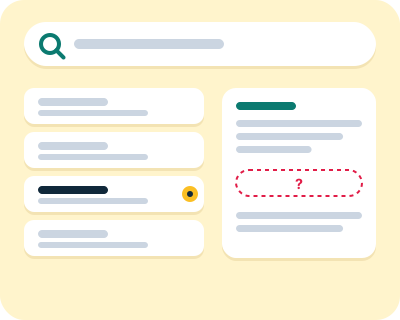
Two honest caveats. Each question is asked once, and AI answers change from one asking to the next, so one check is one reading, not a rule. And the official interface we use can answer differently from the chat app on your phone, which is why we say "AI answer engines" and never "what ChatGPT shows you".
How to get AI to read a website?
Make it readable the plain way. The engines read your public pages the way a simple browser does: real text on the page, not text drawn by scripts after the page loads; no login; nothing in robots.txt that blocks the AI crawlers you want in. Then give them two cheap extras: structured data (schema markup) that states your name, address, phone and what you do in a format machines parse, and an llms.txt file that lists what the site is about in plain text. The engines call llms.txt optional, unproven and cheap. So do we; Camello writes one as hygiene and does not claim an effect. More in What is llms.txt, and does my small business need one?
How do I make my business show up on AI?
Give the engines clear, consistent, independent information about you, in that order of importance. Clear: your own site says what you do, for whom and where, in plain words. Consistent: your name, address and phone are identical everywhere they appear. Independent: other sites, especially your Google Business Profile and review sites, say the same thing about you. That is the engines' own list, and Camello's monthly changes do the on-site part and tell you what the off-site part is.
Here is the list as the engines gave it to us, with how often each item came up across 150 answers to our 25 questions on 2026-10-17:
| What the engines told a small business to do | Answers out of 150 that named it |
|---|---|
| Set up and keep your Google Business Profile complete | 45 |
| Use Google Search Console (free measurement) | 26 |
| Be present where people talk about businesses (Reddit) | 25 |
| Add structured data (schema) to the site | 25 |
| Keep your Yelp listing current | 18 |
| Claim Bing Places and Bing Webmaster Tools | 15 and 8 |
| Track referrals from AI in Google Analytics | 13 |
| Keep review sites current (Trustpilot, G2, Capterra) | 10, 8 and 4 |
| Claim Apple Business Connect | 8 and 3 |
Two of those deserve a sentence. Bing Places comes up because ChatGPT's search reads Bing, so a business that is on Google Maps but not on Bing is half-visible to ChatGPT. Reddit comes up because Google's AI Mode cites it in 17 of our 25 answers; that is a place where real customers talk, not a place to plant threads, and we will not help anyone fake it.
Why does ChatGPT recommend my competitor and not me?
Because the web has more clear, consistent, independent information about them than about you. Nobody pays for the spot. Usually it is one of a few gaps: their site says the service and the city in plain words and yours says "welcome to our website"; their Google Business Profile is complete and reviewed and yours is half-filled; their name, address and phone match everywhere and yours has two spellings; or they answer the questions customers ask, on the page, and you do not.
The free check shows you which competitor an engine named, when the engine itself returned the name, and the page it cited. Read that page. It is usually not clever; it is complete. Then fix the gaps in the order above, starting with your own site, because that is the one place you control completely.
What we do not know: how long it takes to overtake a specific competitor, or whether you will. The engines say weeks to months and no guarantee. We say the same, and we show you the reading every month so you are not guessing.
What should I change on my site?
Start with the fields the engines read first: the page title, the description under it, the main heading, and the first paragraph. Make each one say what you do and where, in the words a customer would type, instead of your business name alone. Then add real answers to the three or four questions customers ask before they buy, as text on the page. Then structured data and image descriptions. Those are the change types Camello proposes, because they are the ones that can be written into a WordPress site cleanly and measured afterward.
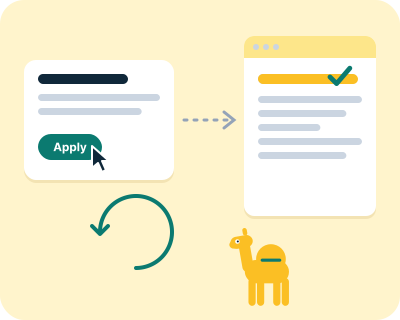
In order, with an example for a made-up plumber. The examples are examples, not measurements.
- The page title. "Home | Acme Plumbing" becomes "Plumber in Franklin, TN | Acme Plumbing". Google cuts titles at about 60 characters, so keep it under that. Checked after 28 days.
- The description. The one or two sentences a search result shows. Say the service, the area and one plain fact: "Licensed plumber in Franklin and Brentwood. Same-week repairs, written estimate first." Checked after 28 days.
- The main heading. "Welcome" becomes "Plumbing repairs in Franklin, Tennessee". Checked after 42 days.
- An FAQ block. Three to five real questions, each answered in two or three sentences, as text on the page. "Do you charge for an estimate?" is worth more than a paragraph about your values. Checked after 42 days.
- Structured data. A
LocalBusinessblock with your name, address, phone, hours and area, and anFAQblock for the questions. Checked after 60 days. - Image descriptions. Every photo gets alt text that says what it shows. Hygiene; we do not claim an effect on AI answers from this one.
- Internal links. From the home page to the service pages, using the service's name as the link text.
llms.txtandrobots.txtlines. Hygiene, cheap, unproven. We write them and do not claim an effect.
On WordPress, Camello writes each of these into the field your site already uses, on your click, reads the page back to confirm it is live, and keeps the old value for Undo. On any other platform, the free check still gives you the exact wording to paste. More on the plugin: Camello for WordPress.
What should I fix off my site?
Your Google Business Profile first, then your name, address and phone everywhere else, then reviews, then Bing Places. That is the order the engines' own answers imply by how often each came up, and it is the order of effort too: the profile is an afternoon, the consistency check is an hour, reviews are a habit, Bing is twenty minutes.
- Google Business Profile. Complete every field: category, services, area, hours, photos, a description in plain words. Named in 45 of 150 engine answers, more than anything else.
- Name, address, phone. Write them once and paste them identically on the site, the profile, Yelp, Bing Places and anywhere else. "Acme Plumbing" and "Acme Plumbing LLC" are two businesses to a machine.
- Reviews. Ask customers for them, on Google first. The engines named review sites in the answers; the engines do not name businesses nobody has reviewed.
- Bing Places and Bing Webmaster Tools. ChatGPT's search reads Bing. Claim the listing with the same name, address and phone.
- Search Console. Free, from Google. It does not make you show up; it tells you whether you did, in real clicks. Camello reads it, read-only, if you connect it.
- Where people talk. Reddit, Quora and local groups come up in the AI Mode answers again and again. Be there as yourself when it is honest to be. Never plant threads, never post as a customer.
Camello does not do any of these for you; they need your login and your judgement. What it does is name the gap on your dashboard ("your profile has no services listed", "the engine cited yelp.com for your competitor") so you know which afternoon to spend.
How do I know if it worked?
Take a baseline first, change one thing, then ask the same questions and check the same pages a month later, and look at three numbers separately: your Google position for the search, your real clicks from Search Console, and whether the AI engines name you. That is what all five engines told us when we asked, and it is the whole of Camello's method: the before and after, with one of three words at the end, won, no effect, or too early to say.
Expect weeks for an engine to re-read a changed page and one to three months to see movement on a search, longer for a competitive one. The engines gave us that range and we have no reason to promise a tighter one. Camello checks a title or description change after 28 days, a heading or structure change after 42 and structured data after 60, and says "too early to say" until the window closes.
Two things make the reading honest. Ask the same questions every month, in the same words, through the same interface, so you are comparing like with like. And count, do not score: "named in 2 of 3 answers" is a fact; a "visibility score of 64" is someone's formula.
What we do not know yet. Camello has no customers' results to show you. When our own engine has run on camello.ai for a few months, this guide will link to our own numbers, including the months where nothing moved.
Does this also cover Perplexity, Gemini and Google's AI Overviews?
Yes, because every engine reads the same web and the same basics feed all of them. They differ in what they reach for first, and that is worth knowing. Here is what we saw on 2026-10-17, asking the same 25 questions of each through its official interface:
| Engine | What it cited first | What that means for you |
|---|---|---|
| ChatGPT | Official documentation: Google's and OpenAI's own pages (14 and 8 of 25 answers) | Factual, consistent pages win. Your profile and your site's plain statements matter most. |
| Perplexity | Recent guides from vendors and publishers, dated; 87 of its 140 results were from the last five months | Dated, current pages. Keep your site's dates honest and your pages updated. |
| Gemini | Searched in only 7 of 25 answers, and cited vendor pages when it did | The weakest signal. A "did not search" is not a zero. |
| Google AI Mode | YouTube in 22 of 25 answers, Reddit in 17, Quora in 12 | Video and forums. A short honest video of you explaining a job counts here. |
| Google AI Overview | Appeared on 1 of our 25 questions | For these questions, from Austin, Texas, it mostly did not show. |
So the on-site work in section 6 and the off-site work in section 7 serve all of them. The one addition for Google's AI Mode is video: not AI-made video, which we will never make for you, but you on camera explaining one job in two minutes. Camello suggests what to film; you film it.
Camello measures ChatGPT, Perplexity and Google's AI Mode every month, and treats Gemini and the Overview as weaker signals, for the reasons in the table.
Questions people ask about showing up on ChatGPT
How do I get my company to show up on ChatGPT?
Make the public record about your company clear and consistent: say what you do and where on your own site, complete your Google Business Profile, keep your name, address and phone identical everywhere, earn reviews, and answer customers' questions as text on the page. There is no registration and no payment. It takes weeks to months.
How do I register my business for ChatGPT?
You cannot. There is no registration. ChatGPT reads the web and names the businesses the web describes clearly. The closest thing to "registering" is completing your Google Business Profile and Bing Places with the same facts as your site.
Can I pay ChatGPT to promote my business?
No. There is no paid placement in the answer. OpenAI sells advertising, which is labelled as an ad and is not the recommendation inside the answer. Anyone selling "submission to ChatGPT" is selling something else.
How to get your brand recommended by ChatGPT?
The same way a business gets recommended by a careful person: be easy to find, say the same facts everywhere, have other people say good things about you where it counts, and answer the questions people ask. ChatGPT repeats what the web says consistently.
How do I make my business show up on AI?
Give the engines clear, consistent, independent information: a plain site, identical name, address and phone everywhere, a complete Google Business Profile, reviews, and real answers on the page. Then measure monthly.
Is my website visible to AI?
Run a check: ask three engines a customer's question through their official interfaces and see whether they name you. Most small businesses start at zero. Camello's free check does this and shows the date.
How to get AI to read a website?
Real text on public pages, no login, nothing in robots.txt blocking the crawlers you want, structured data for your name, address, phone and services, and optionally an llms.txt file. The engines call the last two a help, not a guarantee.
Why does ChatGPT recommend my competitor and not me?
Because the web has more clear, consistent, independent information about them. Nobody pays for the spot. Read the page the engine cited for them; it is usually complete rather than clever.
How do I know if it worked?
Take a baseline, change one thing, and a month later ask the same questions and check the same pages: Google position, real clicks, AI mentions, separately. Expect weeks to months. Camello does the before and after and says won, no effect or too early to say.
See where you show up today.